News
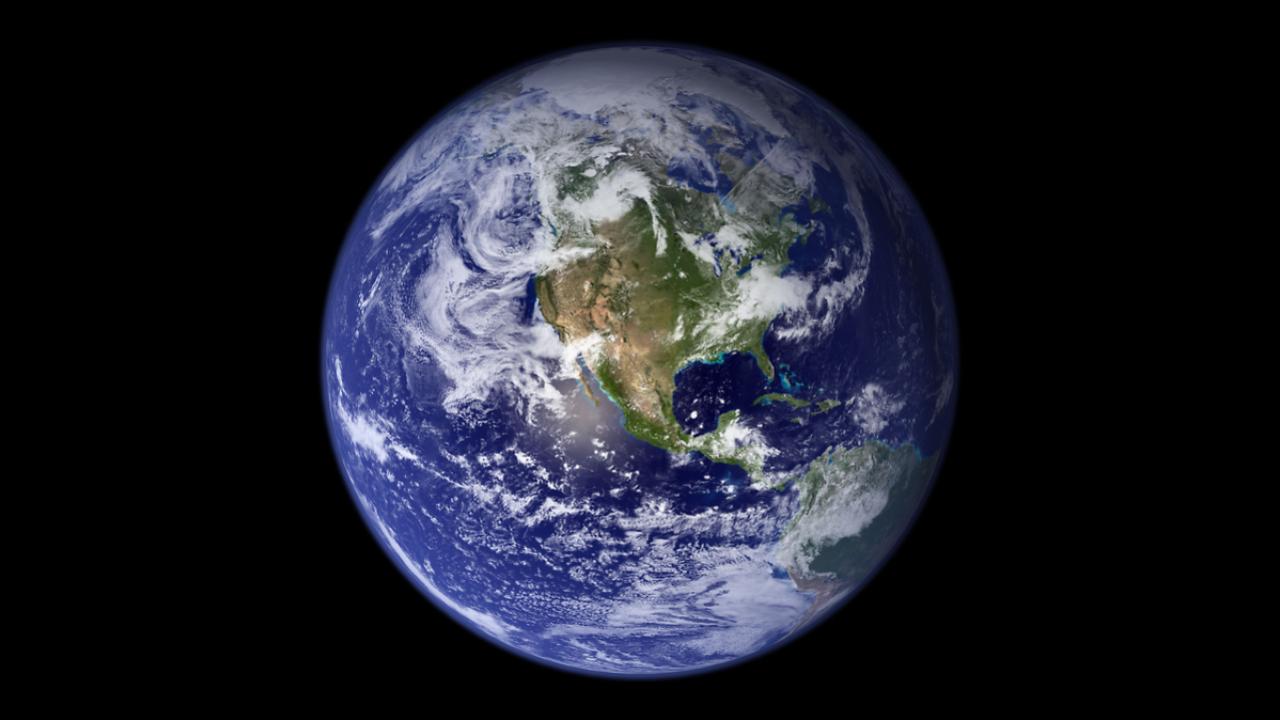
Across the ancient landscapes of human thought, we find echoes of reverence not just for gods or ancestors, but for the Earth itself—its waters, trees, stars, and skies. Long before the modern notion of environmentalism took root, certain cultures had already grasped a fundamental truth: the planet is not a lifeless backdrop to human action, but a living, sacred web of interconnected forces. Among these early voices, the Zoroastrian text Yasna 71:9 stands as a powerful hymn of planetary consciousness.
“Upon all waters, we offer worship; upon all plants and fruitful trees, we offer worship; upon all lands, we offer worship; upon all the sky, we offer worship; upon all stars, upon the moon, upon the sun, we offer worship; upon all lights without darkness, we offer worship; upon all earths, near and far, above and below, inhabited and uninhabited, we offer worship.”
This passage from the Yasna, a core liturgical text of the ancient Persian Zoroastrian tradition, radiates with a spiritual ecology that feels strikingly contemporary. In its sweeping invocation—covering water, plants, land, sky, celestial bodies, and even unseen or distant worlds—it reflects a profound awareness of the Earth as sacred, interconnected, and alive.
The Sacred Fabric of the WorldWhat is immediately striking is the inclusivity of the worship offered. There is no hierarchy here, no separation between “spiritual” and “material.” Water, trees, the sun, and the stars are not symbols of the divine—they are divine. They are worthy of reverence in their own right. This holistic view dissolves the boundary between the human and the planetary, emphasizing that our lives are not isolated, but woven into the broader fabric of creation.
This approach reveals an ancient form of what we might now call planetary consciousness: a recognition that the Earth and cosmos are not merely resources or scenery, but sacred participants in the drama of existence. The verse’s rhythm—“upon all… we offer worship”—evokes the steady beat of ritual, suggesting that reverence for the planet was not just poetic sentiment but daily spiritual practice.
Echoes in Modern Consciousness
Today, as we face climate change, mass extinction, and environmental degradation, this ancient worldview offers a much-needed reorientation. The modern ecological crisis is not just a failure of technology or policy—it is a crisis of perception. We have forgotten how to see the world as sacred. The Yasna calls us back to a vision where light, land, and life are not commodities, but kin.
By asserting that worship extends to “all earths, near and far, above and below, inhabited and uninhabited,” the text also anticipates a kind of cosmic humility. It acknowledges realms we may not even be aware of. In this sense, it’s not just early environmentalism—it’s proto-cosmology, recognizing the multiplicity of worlds and our small place within them.
Persian Roots of Eco-Spirituality
The Earth (Armaiti), water (Apas), and fire (Atar) are not elements to be dominated but divine entities to be protected. These are not abstractions. They are part of a deeply ethical worldview that recognizes balance, purity, and responsibility as central to right living. Such values are embedded in the DNA of Persian cultural and spiritual identity—a heritage worth reawakening in the face of global ecological collapse.
Reclaiming Sacred Responsibility
In the ancient Persian vision, we find a mirror for our own spiritual hunger—for rootedness, for reverence, for relationship with the more-than-human world. We do not need to invent a new planetary ethic. We need only to remember it.
Let us offer worship—not as escape, but as commitment. Not to the heavens alone, but to the Earth beneath our feet.
Reference: Yasna 71:9, English translation via AI— https://persiandna.com/yasna_71.htm
The internet’s oldest bargain is breaking.
For decades, websites welcomed crawlers. Getting scraped — by Google or any search engine — meant getting indexed, ranked, discovered. For every two bots it sent to a website, Google sent one user. So scraping meant web traffic — and business.
But now, as generative artificial intelligence tools race to ingest the entire internet, scraping means getting bypassed. According to Cloudflare, for every user that ChatGPT maker OpenAI sends to a site, it sends 1,500 bots. For Anthropic, that figure is 60,000. Traffic from human visits is flattening while automated traffic surges — sometimes outnumbering people entirely.
And unlike the Google era, these bots usually don’t link back to their source material. Instead, AI models summarize and serve answers inside their own interfaces, keeping users locked in — and cutting websites and content creators out of the loop.
In today’s complex and uncertain world, accurate predictions are a fiction. Strategic Foresight helps you prepare for different futures—those that are possible, plausible, and preferred.
Our Applied Foresight Foundation Program empowers you to:
<ul>
<li>Analyze driving forces and trends of change.</li>
<li>Develop strategies that align with your mission.</li>
<li>Find solutions to shape your organization’s future.</li>
</ul>
<strong>Be a leader in strategic foresight; earn your credentials!</strong>
With rapid tech advancements and global complexities, being a leader in strategic foresight will provide you and your department an advantage for preferred future outcomes.
Our executive program will immerse you in strategic foresight concepts and methodology, including trend analysis, scenario planning, systems thinking, risk assessment, and futures-thinking for shaping policy.
If you would like to learn more, please submit your information and we will follow up with you shortly.
The Alternative Planetary Futures Institute has initiated a partnership with onAir Networks and the Positive Futures Hub. ________
onAir Networks is. ______________
The Positive Hub focuses on aggregating ___________
Alternative Planetary Futures Institute (Ap-Fi), – January 20, 2025
The geopolitical landscape of the Middle East has long been a focal point of international relations, with various nation-states in the region pursuing distinct objectives rooted in their unique historical, cultural, and socio-political contexts. Concurrently, the United States, as a global superpower, has its own set of fundamental objectives that guide its foreign policy. This research report explores the alignment and conflicts between the fundamental objectives of Middle Eastern nation-states and the United States. It also develops scenarios for potential medium-term futures up to 2030, considering how these dynamics might evolve.
HSE University Institute for Statistical Studies and Economics of Knowledge on April 17–18, 2025 organised International Symposium ‘Foresight in a Rapidly Changing World’ in the framework of XXV Yasin (April) International Academic Conference on Economic and Social Development. Its third session was titled ‘Futures Studies: a New Agenda’.
The Symposium focused on dissecting advanced approaches to futures studies, including best practices in national and international STI foresight, the features of foresight-studies amid rapid changes in society, economy, policy, culture and values. Top global experts in this field presented results of their foresight studies, shared modern approaches for organising foresight projects under new conditions, as well as discussed their experience in application of contemporary methods of futures studies.

