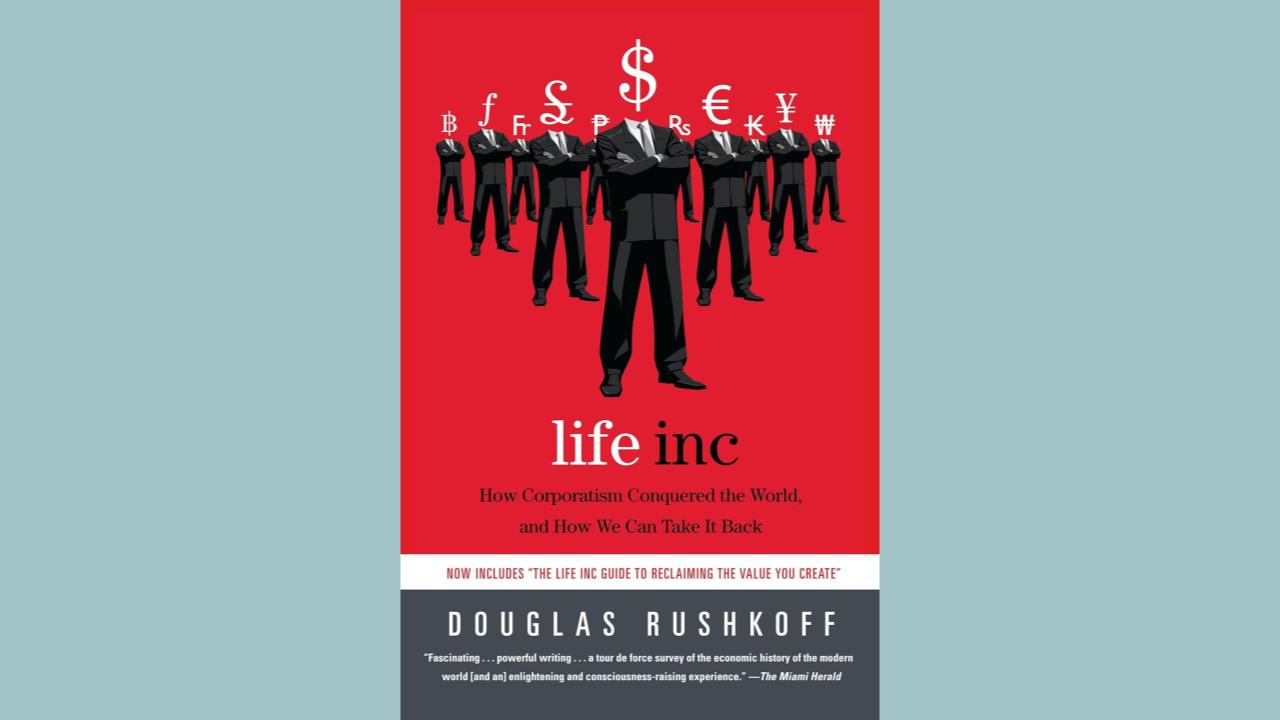
Life Inc: How Corporatism Conquered the World, and How We Can Take It Back (

In Life Inc, award-winning writer Douglas Rushkoff traces how corporations went from being convenient legal fictions to being the dominant fact of contemporary life. The resulting ideology, corporatism, has infiltrated all aspects of civics, commerce, and culture—from the founding of the first chartered monopoly to the branding of the self, from the invention of central currency to the privatization of banking, from the Victorian Great Exhibition to the solipsism of Facebook. Life Inc explains why we see our homes as investments rather than places to live, our 401(k) plans as the ultimate measure of success, and the Internet as just another place to do business.

Most important, Rushkoffilluminates both how we’ve become disconnected from our world and how we can reconnect to our towns, to the value we can create, and, mostly, to one another. As the speculative economy collapses under its own weight, Life Inc shows us how to build a real and human-scaled society to take its place.

Source: Amazon
OnAir Post: Life Inc: How Corporatism Conquered the World, and How We Can Take It Back (

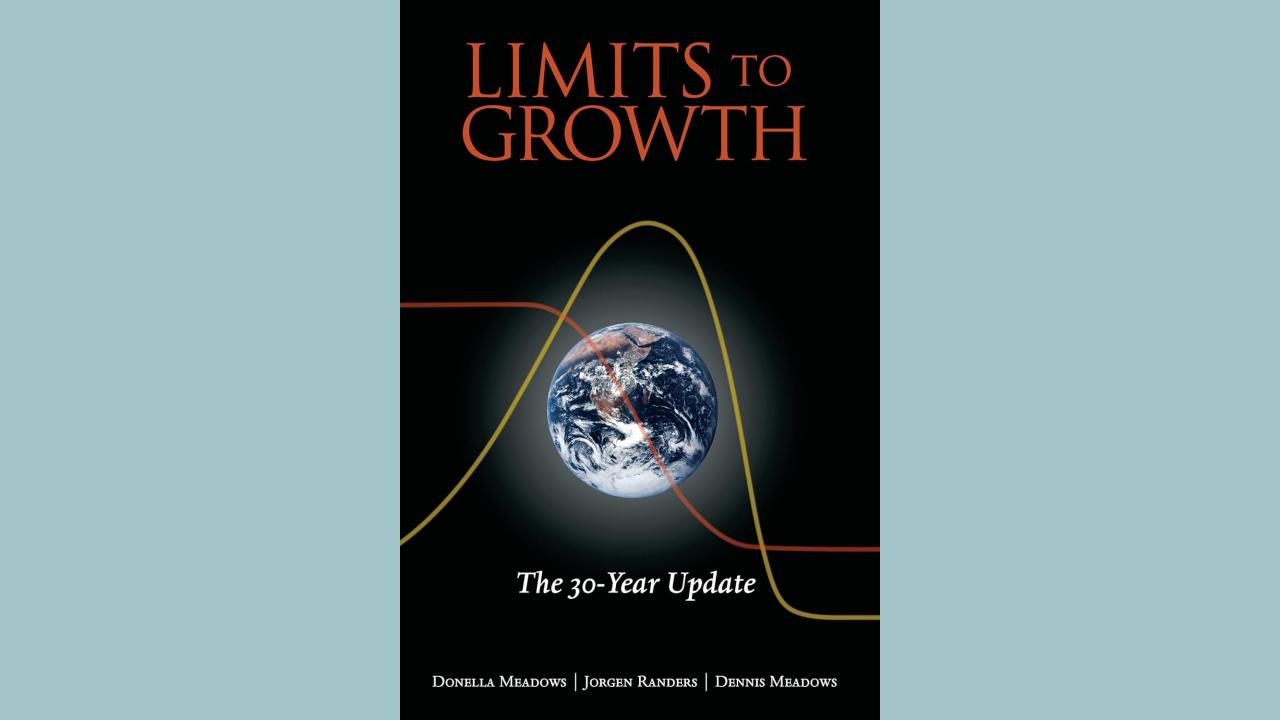
Limits to Growth: The 30-Year Update

“This book helped launch modern environmental computer modeling and began our current globally focused environmental debate . . . . a scientifically rigorous and credible warning.”—The Nation

In 1972, three scientists from MIT created a computer model that analyzed global resource consumption and production. Their results shocked the world and created stirring conversation about global ‘overshoot,’ or resource use beyond the carrying capacity of the planet. Now, preeminent environmental scientists Donnella Meadows, Jorgen Randers, and Dennis Meadows have teamed up again to update and expand their original findings in The Limits to Growth: The 30 Year Global Update.

OnAir Post: Limits to Growth: The 30-Year Update

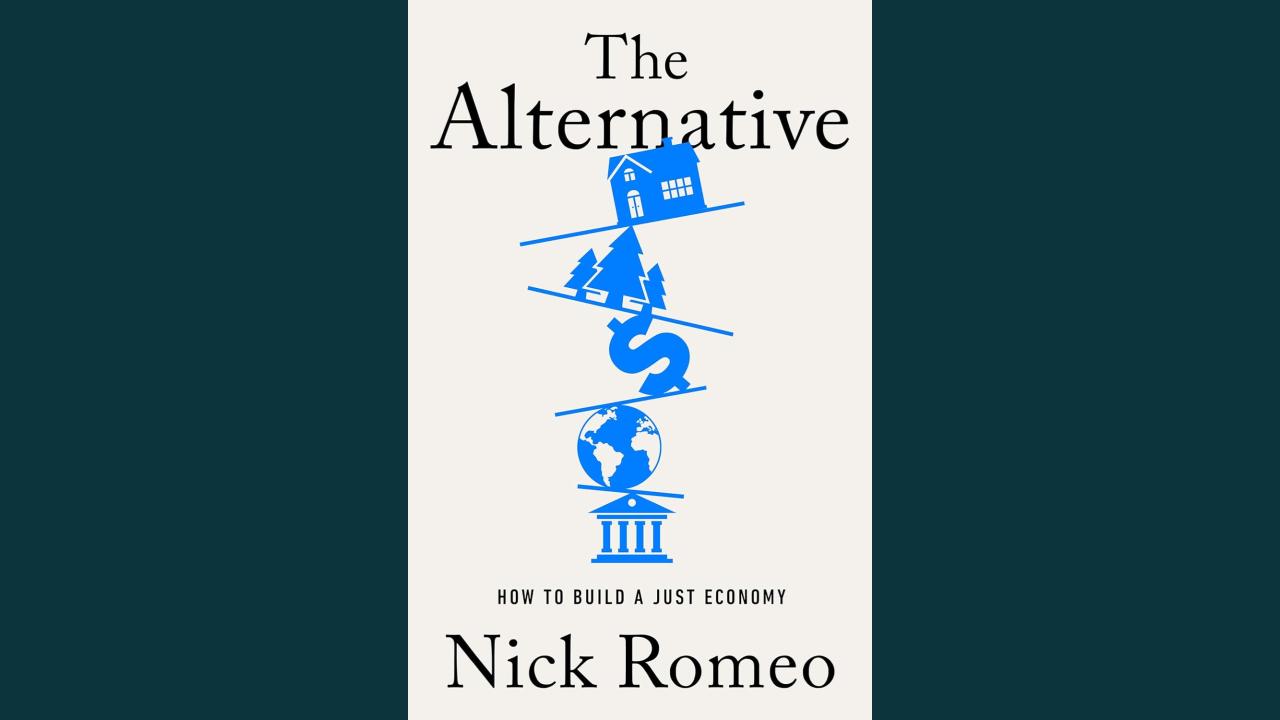
The Alternative: How to Build a Just Economy

Winners Take All meets Nickel and Dimed in this provocative debunking of accepted wisdom, providing the pathway to a sustainable, survivable economy. 

Confronted by the terrifying trends of the early twenty-first century – widening inequality, environmental destruction, and the immiseration of millions of workers around the world – many economists and business leaders still preach dogmas that lack evidence and create political catastrophe: Private markets are always more efficient than public ones; investment capital flows efficiently to necessary projects; massive inequality is the unavoidable side effect of economic growth; people are selfish and will only behave well with the right incentives.

OnAir Post: The Alternative: How to Build a Just Economy

Growth for Good: Reshaping Capitalism to Save Humanity from Climate Catastrophe

Foreign Affairs Best Book of the Year

From the front lines of economics and policymaking, a compelling case that economic growth is a force for good and a blueprint for enrolling it in the fight against climate change.

Economic growth is wrecking the planet. It’s the engine driving climate change, pollution, and the shrinking of natural spaces. To save the environment, will we have to shrink the economy? Might this even lead to a better society, especially in rich nations, helping us break free from a pointless obsession with material wealth that only benefits the few? Alessio Terzi takes these legitimate questions as a starting point for a riveting journey into the socioeconomic, evolutionary, and cultural origins of our need for growth. It’s an imperative, he argues, that we abandon at our own risk.

Source: Amzon

OnAir Post: Growth for Good: Reshaping Capitalism to Save Humanity from Climate Catastrophe

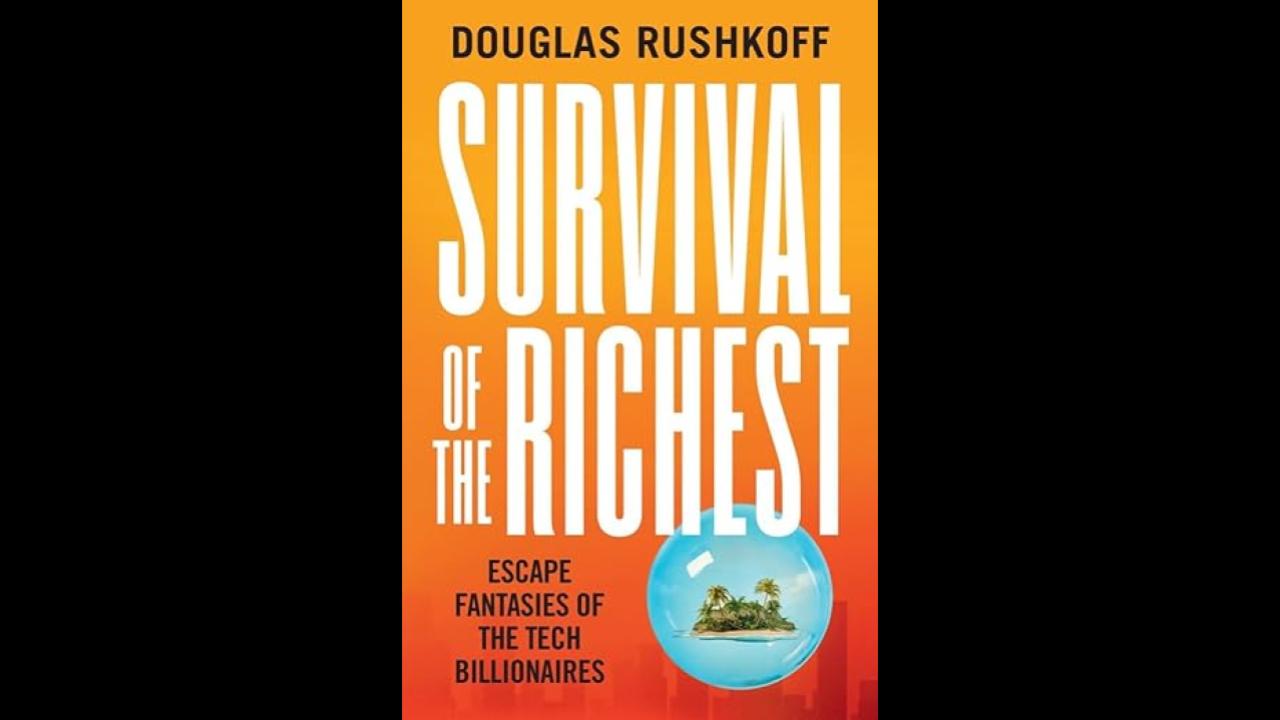
Survival of the Richest: Escape Fantasies of the Tech Billionaires

The tech elite have a plan to survive the apocalypse: they want to leave us all behind.

Five mysterious billionaires summoned theorist Douglas Rushkoff to a desert resort for a private talk. The topic? How to survive the “Event”: the societal catastrophe they know is coming. Rushkoff came to understand that these men were under the influence of The Mindset, a Silicon Valley–style certainty that they and their cohort can break the laws of physics, economics, and morality to escape a disaster of their own making―as long as they have enough money and the right technology.

In Survival of the Richest, Rushkoff traces the origins of The Mindset in science and technology through its current expression in missions to Mars, island bunkers, AI futurism, and the metaverse. In a dozen urgent, electrifying chapters, he confronts tech utopianism, the datafication of all human interaction, and the exploitation of that data by corporations. Through fascinating characters―master programmers who want to remake the world from scratch as if redesigning a video game and bankers who return from Burning Man convinced that incentivized capitalism is the solution to environmental disasters―Rushkoff explains why those with the most power to change our current trajectory have no interest in doing so. And he shows how recent forms of anti-mainstream rebellion―QAnon, for example, or meme stocks―reinforce the same destructive order.

This mind-blowing work of social analysis shows us how to transcend the landscape The Mindset created―a world alive with algorithms and intelligences actively rewarding our most selfish tendencies―and rediscover community, mutual aid, and human interdependency. In a thundering conclusion, Survival of the Richest argues that the only way to survive the coming catastrophe is to ensure it doesn’t happen in the first place.

Source: Amazon

OnAir Post: Survival of the Richest: Escape Fantasies of the Tech Billionaires

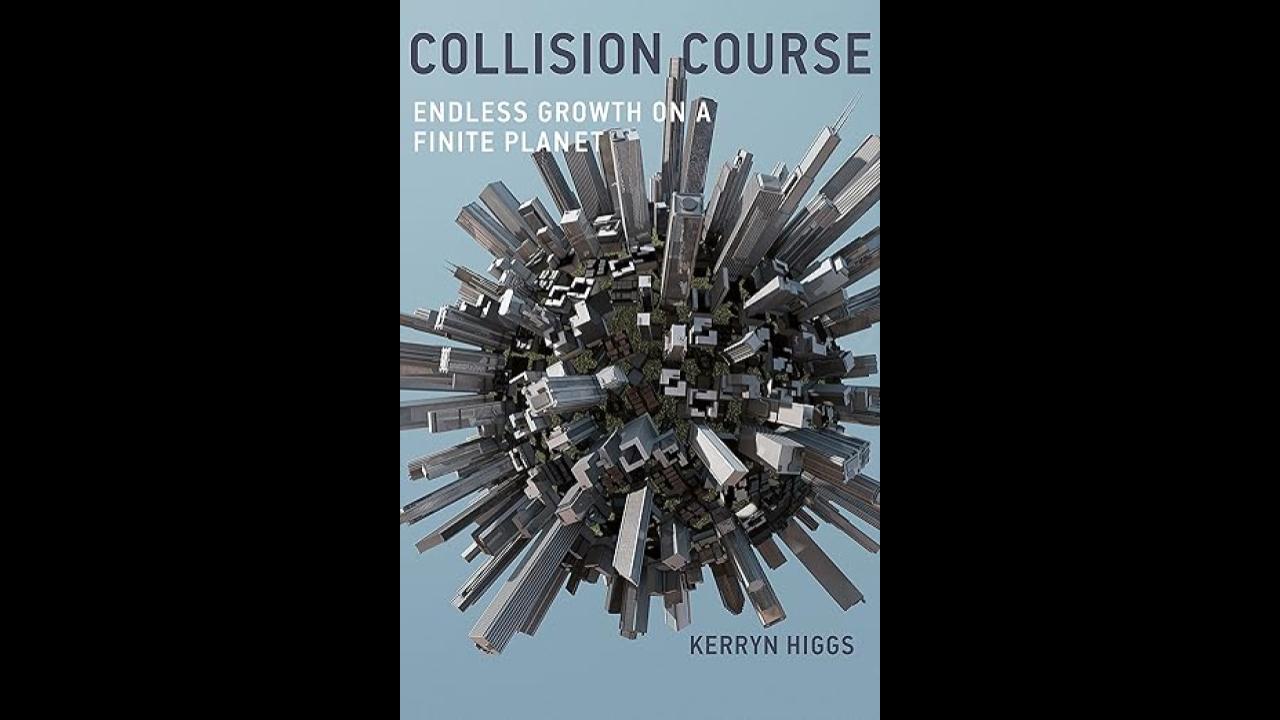
Collision Course: Endless Growth on a Finite Planet

The story behind the reckless promotion of economic growth despite its disastrous consequences for life on the planet.

The notion of ever-expanding economic growth has been promoted so relentlessly that growth is now entrenched as the natural objective of collective human effort. The public has been convinced that growth is the natural solution to virtually all social problemspoverty, debt, unemployment, and even the environmental degradation caused by the determined pursuit of growth. Meanwhile, warnings by scientists that we live on a finite planet that cannot sustain infinite economic expansion are ignored or even scorned. In Collision Course, Kerryn Higgs examines how society’s commitment to growth has marginalized scientific findings on the limits of growth, casting them as bogus predictions of imminent doom.

Higgs tells how in 1972, The Limits to Growthwritten by MIT researchers Donella Meadows, Dennis Meadows, Jorgen Randers, and William Behrens IIIfound that unimpeded economic growth was likely to collide with the realities of a finite planet within a century. Although the book’s arguments received positive responses initially, before long the dominant narrative of growth as panacea took over. Higgs explores the resistance to ideas about limits, tracing the propagandizing of free enterprise, the elevation of growth as the central objective of policy makers, the celebration of the magic of the market, and the ever-widening influence of corporate-funded think tanksa parallel academic universe dedicated to the dissemination of neoliberal principles and to the denial of health and environmental dangers from the effects of tobacco to global warming. More than forty years after The Limits to Growth, the idea that growth is essential continues to hold sway, despite the mounting evidence of its costsclimate destabilization, pollution, intensification of gross global inequalities, and depletion of the resources on which the modern economic edifice depends.

Source: Amazon

OnAir Post: Collision Course: Endless Growth on a Finite Planet

Skip to toolbar