Atlas of Forecasts

Forecasting the future with advanced data models and visualizations.

To envision and create the futures we want, society needs an appropriate understanding of the likely impact of alternative actions. Data models and visualizations offer a way to understand and intelligently manage complex, interlinked systems in science and technology, education, and policymaking. Atlas of Forecasts, from the creator of Atlas of Science and Atlas of Knowledge, shows how we can use data to predict, communicate, and ultimately attain desirable futures.

Using advanced data visualizations to introduce different types of computational models, Atlas of Forecasts demonstrates how models can inform effective decision-making in education, science, technology, and policymaking. The models and maps presented aim to help anyone understand key processes and outcomes of complex systems dynamics, including which human skills are needed in an artificial intelligence–empowered economy; what progress in science and technology is likely to be made; and how policymakers can future-proof regions or nations. This Atlas offers a driver’s seat-perspective for a test-drive of the future.

Source: MIT Press

OnAir Post: Atlas of Forecasts
The 21st Century Singularity and Global Futures: A Big History Perspective (World-Systems Evolution and Global Futures)

This book introduces a ‘Big History’ perspective to understand the acceleration of social, technological and economic trends towards a near-term singularity, marking a radical turning point in the evolution of our planet. It traces the emergence of accelerating innovation rates through global history and highlights major historical transformations throughout the evolution of life, humans, and civilization. The authors pursue an interdisciplinary approach, also drawing on concepts from physics and evolutionary biology, to offer potential models of the underlying mechanisms driving this acceleration, along with potential clues on how it might progress.
The contributions gathered here are divided into five parts, the first of which studies historical mega-trends in relation to a variety of aspects including technology, population, energy, and information.

The second part is dedicated to a variety of models that can help understand the potential mechanisms, and support extrapolation. In turn, the third part explores various potential future scenarios, along with the paths and decisions that are required. The fourth part presents philosophical perspectives on the potential deeper meaning and implications of the trend towards singularity, while the fifth and last part discusses the implications of the Search for Extraterrestrial Intelligence (SETI). Given its scope, the book will appeal to scholars from various disciplines interested in historical trends, technological change and evolutionary processes.

Source: Amazon

OnAir Post: The 21st Century Singularity and Global Futures: A Big History Perspective (World-Systems Evolution and Global Futures)

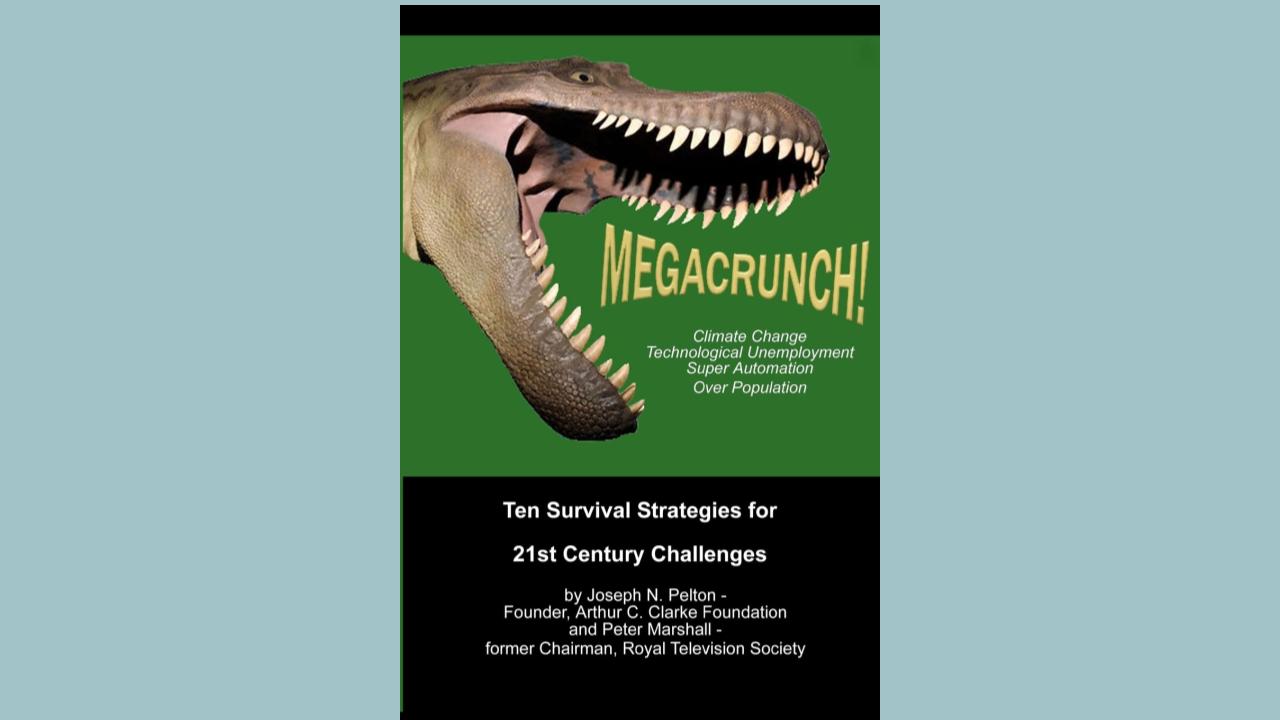
Megacrunch

The continuing post-Copenhagen debate on Climate Change and Global Warming is not the only major threat confronting the people and politicians of the world; and it may not even be the greatest threat.

The 21st Century challenges we face in the coming decades also include Super Automation, Structural Unemployment, the failure of Conventional Market Systems, Super-Urbanization and Over Population. Are we, like the dinosaurs, an endangered species threatened by mass extinction? In “MegaCrunch”, authors Joseph N. Pelton and Peter Marshall outline ten survival strategies we need to pursue to survive as a species.

OnAir Post: Megacrunch

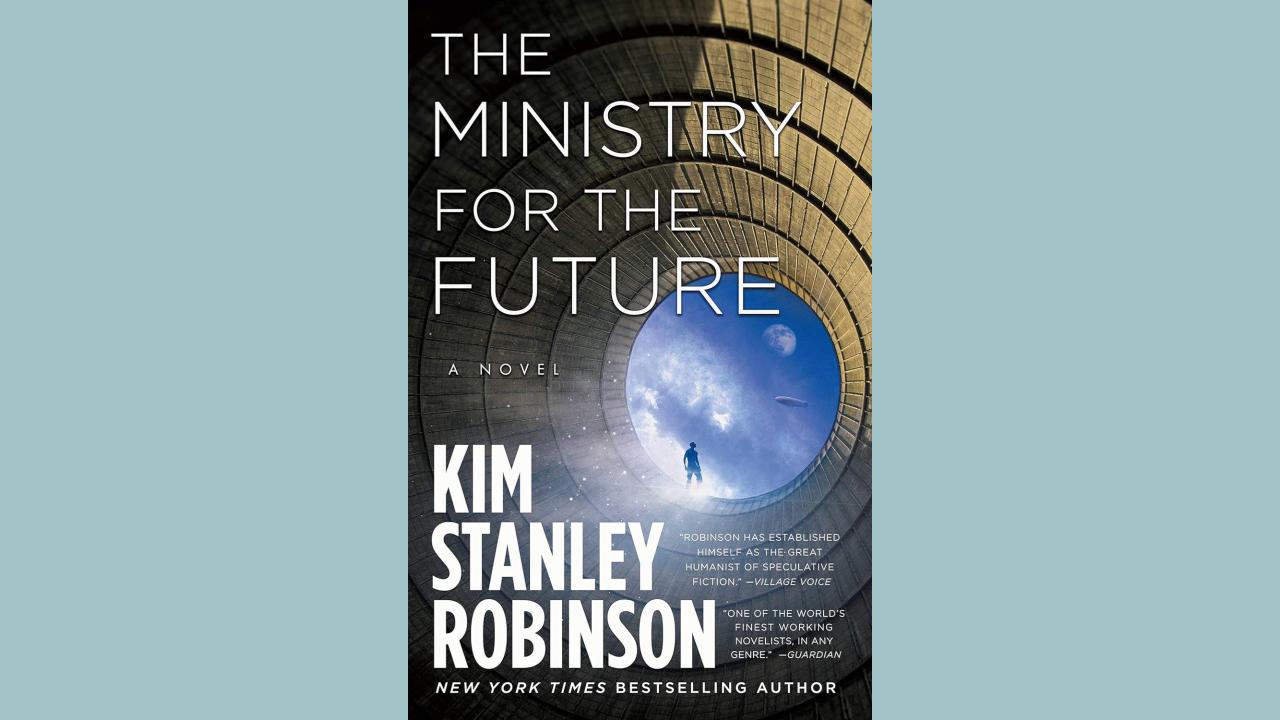
The Ministry for the Future

“The best science-fiction nonfiction novel I’ve ever read.” —Jonathan Lethem

“If I could get policymakers, and citizens, everywhere to read just one book this year, it would be Kim Stanley Robinson’s The Ministry for the Future.” —Ezra Klein (Vox)

The Ministry for the Future is a masterpiece of the imagination, using fictional eyewitness accounts to tell the story of how climate change will affect us all. Its setting is not a desolate, postapocalyptic world, but a future that is almost upon us. Chosen by Barack Obama as one of his favorite books of the year, this extraordinary novel from visionary science fiction writer Kim Stanley Robinson will change the way you think about the climate crisis.

Source: Amazon

OnAir Post: The Ministry for the Future

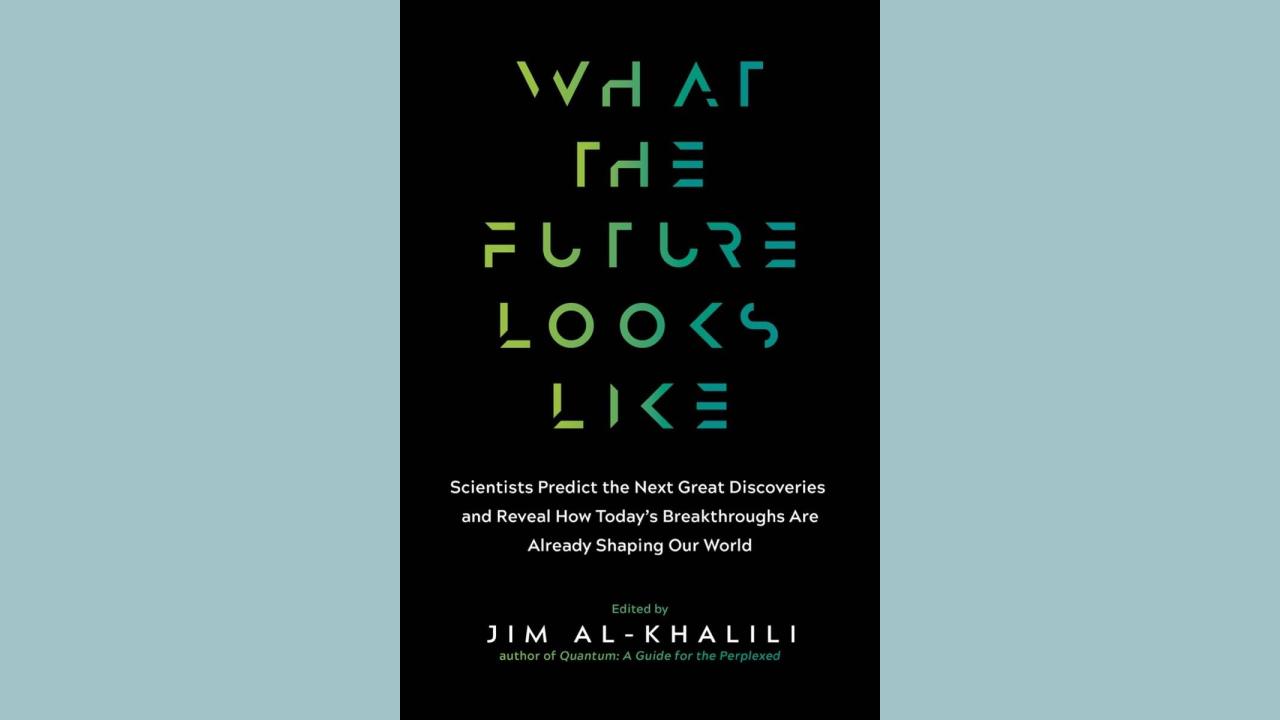
What the Future Looks Like

What the Future Looks Like: Scientists Predict the Next Great Discoveries and Reveal How Today’s Breakthroughs Are Already Shaping Our World

Science fact, not science fiction, on the cutting–edge developments that are already changing the course of our future

Every day, scientists conduct pioneering experiments with the potential to transform how we live. Yet it isn’t every day you hear from the scientists themselves! Now, award–winning author Jim Al–Khalili and his team of top-notch experts explain how today’s earthshaking discoveries will shape our world tomorrow―and beyond.

Source: Amazon

OnAir Post: What the Future Looks Like

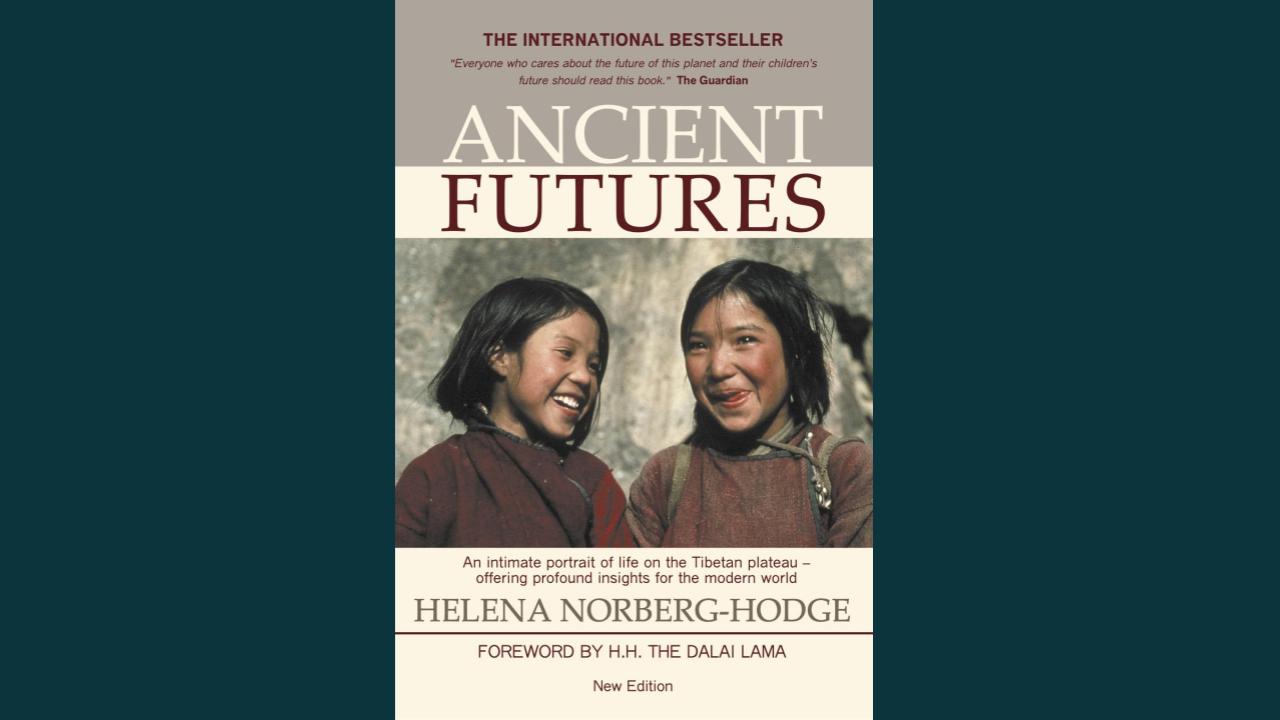
Ancient Futures

A moving portrait of tradition and change in Ladakh, or “Little Tibet,” Ancient Futures is also a scathing critique of the global economy and a rallying call for economic localization.

When Helena Norberg-Hodge first visited Ladakh in 1975, she found a pristine environment, a self-reliant economy and a people who exhibited a remarkable joie de vivre. But then came a tidal wave of economic growth and development. Over the last four decades, this remote Himalayan land has been transformed by outside markets and Western notions of “progress.” As a direct result, a whole range of problems―from polluted air and water to unemployment, religious conflict, eating disorders and youth suicide―have appeared for the first time.

Source: Amazon

OnAir Post: Ancient Futures

Work/Technology 2050: Scenarios and Actions

Report on a three-year international study that produced three detailed scenarios, conducted 30 national workshops in 29 countries, identified hundreds of action distilled to 93 that were assessed by hundreds of futurists and related experts in over 50 countries.

​​​​​​​Work/Technology 2050: Scenarios and Actions could be the broadest, deepest, long-range international assessment about what to do about the future impacts of future technology.

Source: The Millennium Project

OnAir Post: Work/Technology 2050: Scenarios and Actions

The next 500 years

An argument that we have a moral duty to explore other planets and solar systems—because human life on Earth has an expiration date.

Inevitably, life on Earth will come to an end, whether by climate disaster, cataclysmic war, or the death of the sun in a few billion years. To avoid extinction, we will have to find a new home planet, perhaps even a new solar system, to inhabit. In this provocative and fascinating book, Christopher Mason argues that we have a moral duty to do just that. As the only species aware that life on Earth has an expiration date, we have a responsibility to act as the shepherd of life-forms—not only for our species but for all species on which we depend and for those still to come (by accidental or designed evolution). Mason argues that the same capacity for ingenuity that has enabled us to build rockets and land on other planets can be applied to redesigning biology so that we can sustainably inhabit those planets. And he lays out a 500-year plan for undertaking the massively ambitious project of reengineering human genetics for life on other worlds.

As they are today, our frail human bodies could never survive travel to another habitable planet. Mason describes the toll that long-term space travel took on astronaut Scott Kelly, who returned from a year on the International Space Station with changes to his blood, bones, and genes. Mason proposes a ten-phase, 500-year program that would engineer the genome so that humans can tolerate the extreme environments of outer space—with the ultimate goal of achieving human settlement of new solar systems. He lays out a roadmap of which solar systems to visit first, and merges biotechnology, philosophy, and genetics to offer an unparalleled vision of the universe to come.

Source: MIT Press

OnAir Post: The next 500 years

Skip to toolbar